

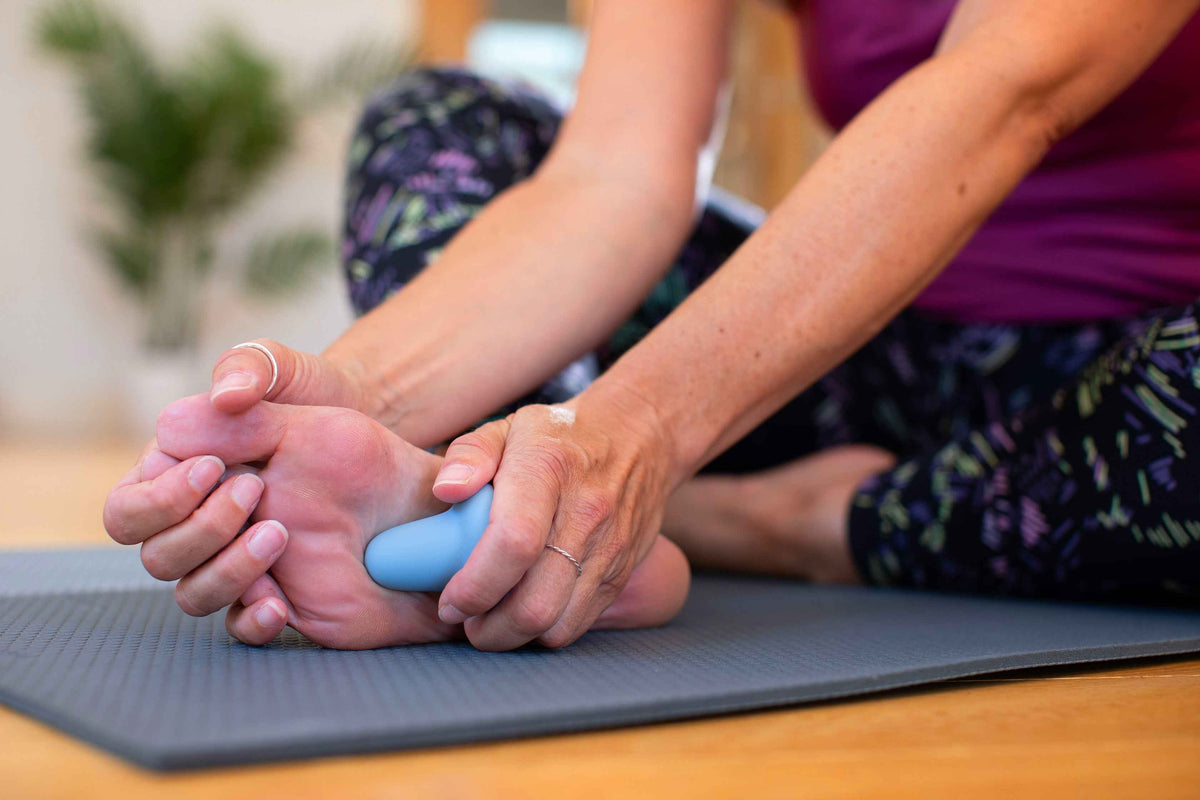
Can targeted pressure help relieve aches and muscle tension?
When something aches, one of our most natural reactions is to press, rub or massage the area.
It feels instinctive. But research into acupressure suggests there may be more behind targeted pressure than simply feeling good in the moment.
Studies have explored whether applying pressure to specific areas of the body could help reduce pain, ease discomfort and support our body's natural response to tension.
Taking a closer look at pressure and pain
A large systematic review and meta-analysis published in 2021 looked specifically at the effectiveness of acupressure for people experiencing lower back pain.
Rather than looking at a single experiment, researchers brought together the findings of 23 randomised controlled trials involving 2,400 people.
The studies compared acupressure with approaches including usual care, physical therapy and traditional massage.
The researchers then analysed the combined results to see whether there was consistent evidence of an effect.
What did they find?
Overall, the results were encouraging.
The analysis found that acupressure was associated with greater reductions in lower back pain when compared with usual care and physical therapy.
Some of the studies also compared acupressure with traditional massage, with the combined results again favouring acupressure for pain reduction.
There were signs that the benefits could go beyond how pain actually felt, too. Researchers found improvements in measures relating to how lower back pain affected people's ability to function in everyday life.
An earlier systematic review provides some additional support.
Published in 2011, it examined 43 randomised controlled trials investigating acupressure for a range of symptoms. Of the 10 studies that specifically investigated pain, researchers in nine concluded that acupressure was effective.
Why might pressure feel good?
This is where things get interesting.
Exactly how acupressure influences our perception of pain isn't completely understood, and there are different theories about what may be happening.
Applying targeted pressure stimulates sensory receptors in the skin, muscles and other tissues. Researchers have proposed that this stimulation may influence the nervous system and the way pain signals are processed.
There may also be more straightforward physical effects. Firm, targeted pressure can provide a different sensory experience to gentle touch, helping us reach areas that feel tight, tender or uncomfortable.
It's one reason massage therapists often use different levels and types of pressure depending on where they're working and how the body responds.
So, can targeted pressure help with aches and tension?
The evidence is promising.
The 2021 review concluded that acupressure could provide clinical benefits for lower back pain, particularly in the short term.
But there are some important limitations.
The researchers found considerable differences between the individual studies and rated the overall quality of some of the evidence as limited. They concluded that larger, better designed clinical trials are still needed.
It's also important to recognise that these studies investigated acupressure, where pressure is applied to specific points on the body. That's not necessarily the same as simply pressing or massaging an area that feels tight.
What the research does show is that pressure and touch are worthy of continued scientific investigation when it comes to pain, tension and how our bodies feel.
And perhaps there's a reason we're so instinctively drawn to pressing, rubbing and massaging those areas that need a little extra attention.
The research
Li T, Li X, Huang F, Tian Q, Fan ZY, Wu S. Clinical Efficacy and Safety of Acupressure on Low Back Pain: A Systematic Review and Meta-Analysis. Evidence-Based Complementary and Alternative Medicine. 2021;2021:8862399. DOI: 10.1155/2021/8862399.
Lee EJ, Frazier SK. The Efficacy of Acupressure for Symptom Management: A Systematic Review. Journal of Pain and Symptom Management. 2011;42(4):589-603. DOI: 10.1016/j.jpainsymman.2011.01.007.
A note on the research: This article discusses research into acupressure for general information only. Acupressure is a specific technique and the research discussed here does not investigate AYA products. Research into pressure, massage and pain management is ongoing, and these findings should not be interpreted as evidence that massage products can diagnose, treat or cure pain or any medical condition.


