

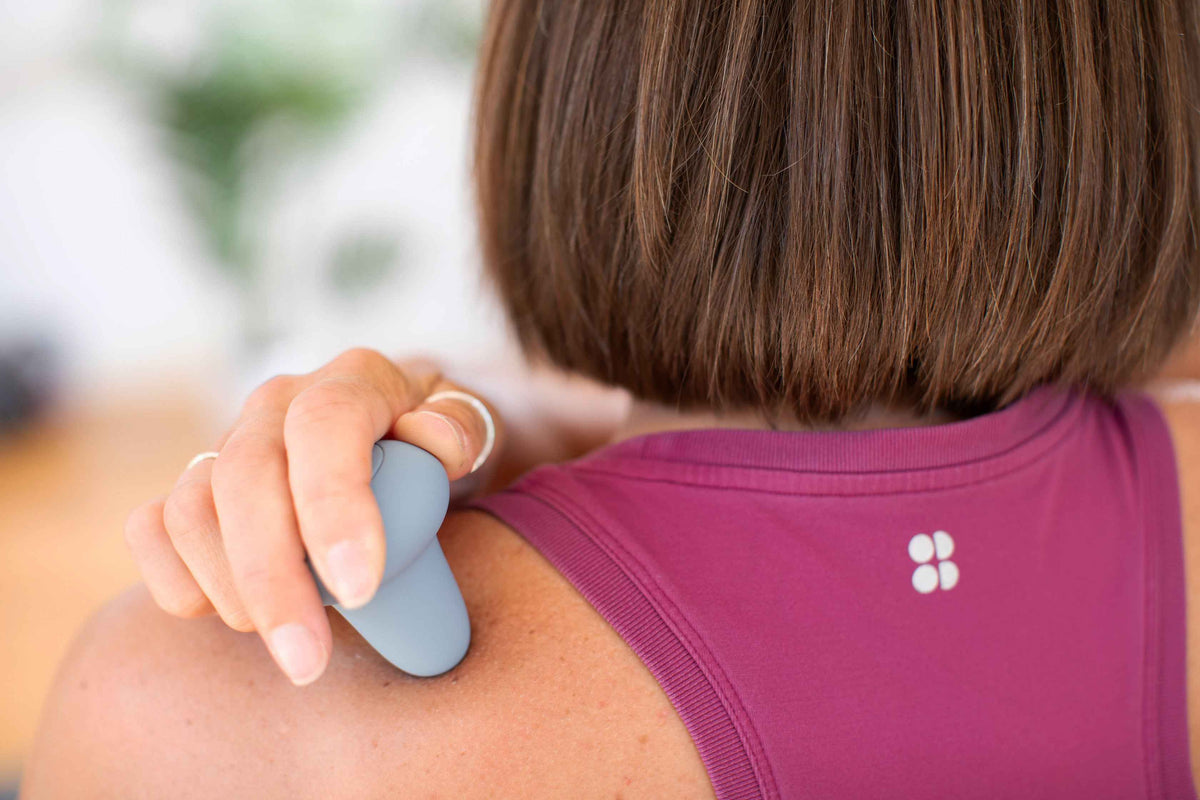
Can vibration therapy help with post-workout muscle soreness?
We’ve all felt it. That stiffness and soreness that can appear the day after a workout, particularly after trying something new or pushing your body a little harder than usual.
It’s known as delayed onset muscle soreness, or DOMS, and research suggests vibration therapy may have a role to play in reducing how sore our muscles feel afterwards.
Putting vibration therapy to the test
A study published in the Journal of Clinical and Diagnostic Research compared vibration therapy with traditional massage to see whether either could help reduce the effects of delayed onset muscle soreness.
The researchers studied 45 healthy, non-athletic women, splitting them randomly into three groups.
One group received five minutes of vibration therapy at 50 Hz. Another received 15 minutes of massage. The third received no treatment.
The vibration and massage treatments were given immediately before exercise designed to create muscle soreness in the arm.
Researchers then monitored participants for 72 hours, looking at muscle soreness, range of motion, strength and biological markers associated with muscle stress.
What did they find?
Both vibration therapy and massage were associated with significantly less muscle soreness than no treatment at 24, 48 and 72 hours after exercise.
Interestingly, the vibration group showed earlier recovery from soreness than the massage group at the 24 hour measurement.
Researchers also found that range of motion recovered significantly better in the treatment groups at 48 and 72 hours compared with the control group.
There were differences in some of the other measurements too. Massage performed better in restoring one measure of muscle strength, while vibration therapy was associated with lower levels of lactate dehydrogenase, or LDH, 48 hours after exercise.
The researchers ultimately concluded that both vibration therapy and massage were effective in helping to prevent some of the effects of delayed onset muscle soreness, with vibration therapy showing particularly promising results for the early reduction of pain.
So, could a little vibration help with recovery?
Potentially.
This is a small study, and it looked at a very specific group of people under controlled conditions, so it would be wrong to suggest that vibration therapy is a proven solution for everyone.
What it does provide is interesting evidence that targeted vibration may influence how our muscles feel and recover following exercise.
And perhaps most interestingly, the vibration treatment in this study lasted just five minutes.
For us, it’s another fascinating piece of research into how something as simple as vibration can interact with the body, and why vibration therapy continues to be explored across recovery, movement and wellbeing.
The research
Imtiyaz S, Veqar Z, Shareef MY. To Compare the Effect of Vibration Therapy and Massage in Prevention of Delayed Onset Muscle Soreness (DOMS). Journal of Clinical and Diagnostic Research. 2014;8(1):133-136. DOI: 10.7860/JCDR/2014/7294.3971.
A note on the research: This article discusses the findings of an individual scientific study for general information only. Research into vibration therapy is ongoing, and results from individual studies should not be interpreted as proof of a health benefit or as medical advice.


